10+ Unique Ways to Introduce a Dance Performance (Anchoring Script)
“Dancing is like dreaming with your feet.”
When you are anchoring a school function, the hardest part is not the “Welcome” or the “Conclusion.”
It is the middle bit. You have 10 different dance groups, and you can’t just keep saying, “Now, I call the next group on stage.” It sounds boring, and the audience loses interest.
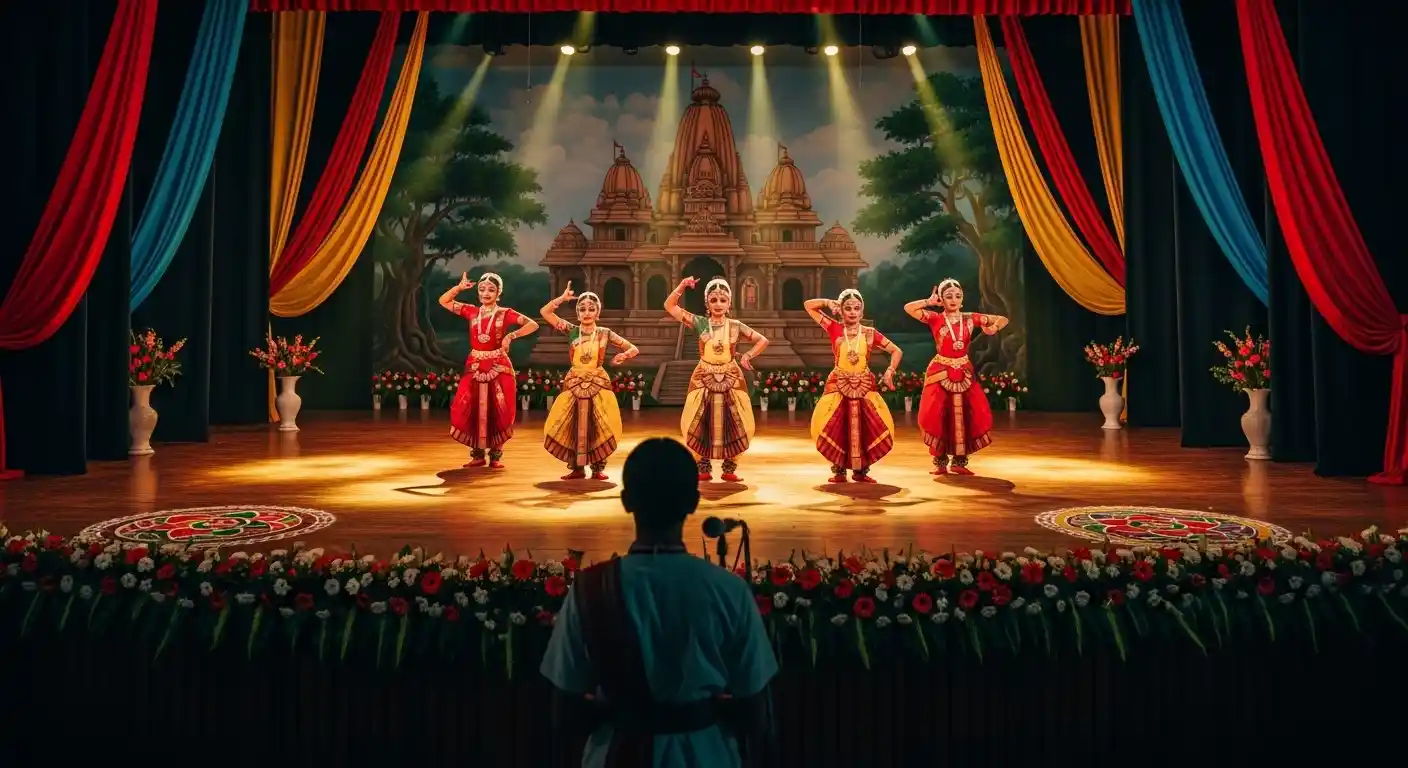
To be a Pro-Anchor, you need a specific “Intro” for every style of dance. Whether it is a classical Ganesh Vandana or a high-energy Bollywood remix, your words should set the mood.
Here are 10+ unique templates to introduce different dance performances.
1. Intro for Ganesh Vandana (The Opening Dance)
“Before we begin our cultural journey, let us seek the blessings of the Vighnaharta. To remove all obstacles and fill this hall with divine energy, here is a graceful Ganesh Vandana by the students of Class [X].”
If you are hosting a daily event rather than a big annual function, check out our guide on News Headlines Script for School Assembly.
2. Intro for a Patriotic Dance (Deshbhakti)
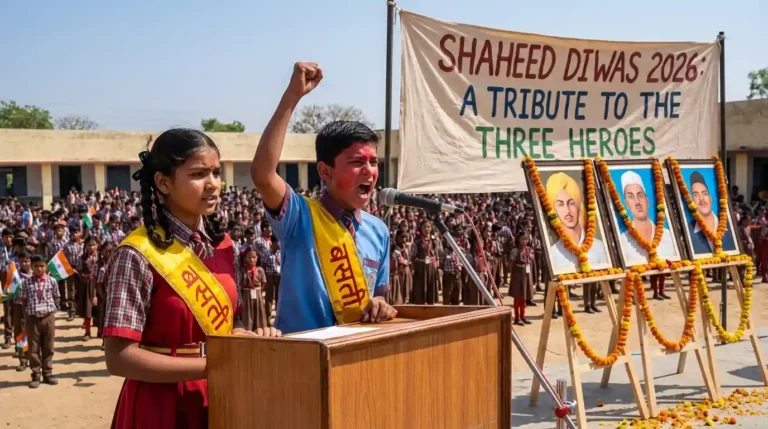
“Our next performance is not just a dance; it is a salute to our soil. It is a reminder of the sacrifices that allow us to stand here today. Get ready to feel the ‘Josh’! Please welcome the [Group Name] for a Patriotic Tribute.”
3. Intro for a Bollywood/Hip-Hop Dance (High Energy)
“Is everyone feeling sleepy? Well, not for long! Our next group is about to set the floor on fire. If you feel like dancing in your seats, don’t stop yourselves! Put your hands together for the [Group Name]!”
4. Intro for a Folk Dance (Bhangra/Garba/Lavani)
“India is a land of many colors, and our next performance brings the raw energy of our roots. From the beats of the Dhol to the grace of tradition, here is a vibrant [Name of Folk Dance] performance!”
5. Intro for a Welcome Dance (Swagat Nritya)
“A guest in India is treated like a God. To welcome our dignitaries in the most traditional way, our tiny tots are ready with a Welcome Dance. Let’s welcome them with a big round of applause!”
6. Intro for a Message-Based Dance (Social Issue)
“Sometimes, feet can say what words cannot. Our next performance carries a powerful message about [Topic, e.g., Saving Earth]. Please watch closely as the students of Class [X] perform this Theme Dance.”
5 “Filler” Lines (When the Dancers aren’t ready)
Anchors, use these when there is a delay behind the curtains:
- “Wow! That was amazing. Can we have one more round of applause for that group?”
- “I can see the next group is getting their ‘Ghungroos’ ready. While they do that, let me ask the audience—how is the energy so far?”
- “Did you know that dancing for 30 minutes burns more calories than jogging? Our students are clearly the healthiest people here today!”
- “I see a lot of parents filming on their phones. Make sure you tag our school’s Instagram page!”
Pro-Tips for Introducing a Dance
1. Use “The Hook”
Before calling the name of the group, describe the feeling of the dance. It builds suspense.
2. The “Clap” Command
Don’t just say “Applause.” Say, “I want to hear the loudest cheer this hall has ever heard!” It forces the audience to participate.
3. Check the Song Name
If the dance is on a famous song, mention a line from the song in your intro. For example: “As the song says, ‘Mera Rang De Basanti Chola’, let’s welcome the martyrs’ tribute.”
Frequently Asked Questions (FAQs)
Q1: How long should a dance introduction be?
Ans: Keep it under 30 to 45 seconds. The audience is there to see the dance, not hear you talk.
Q2: Should I stay on stage during the dance?
Ans: No. As soon as you finish the last line of your intro, walk off the stage quickly so the focus shifts to the dancers.
Q3: What if the music doesn’t start?
Ans: Don’t walk away! Stay on the mic, crack a small joke like, “Our DJ is just making sure the bass is perfect for your ears,” and then re-introduce the group once the music starts.