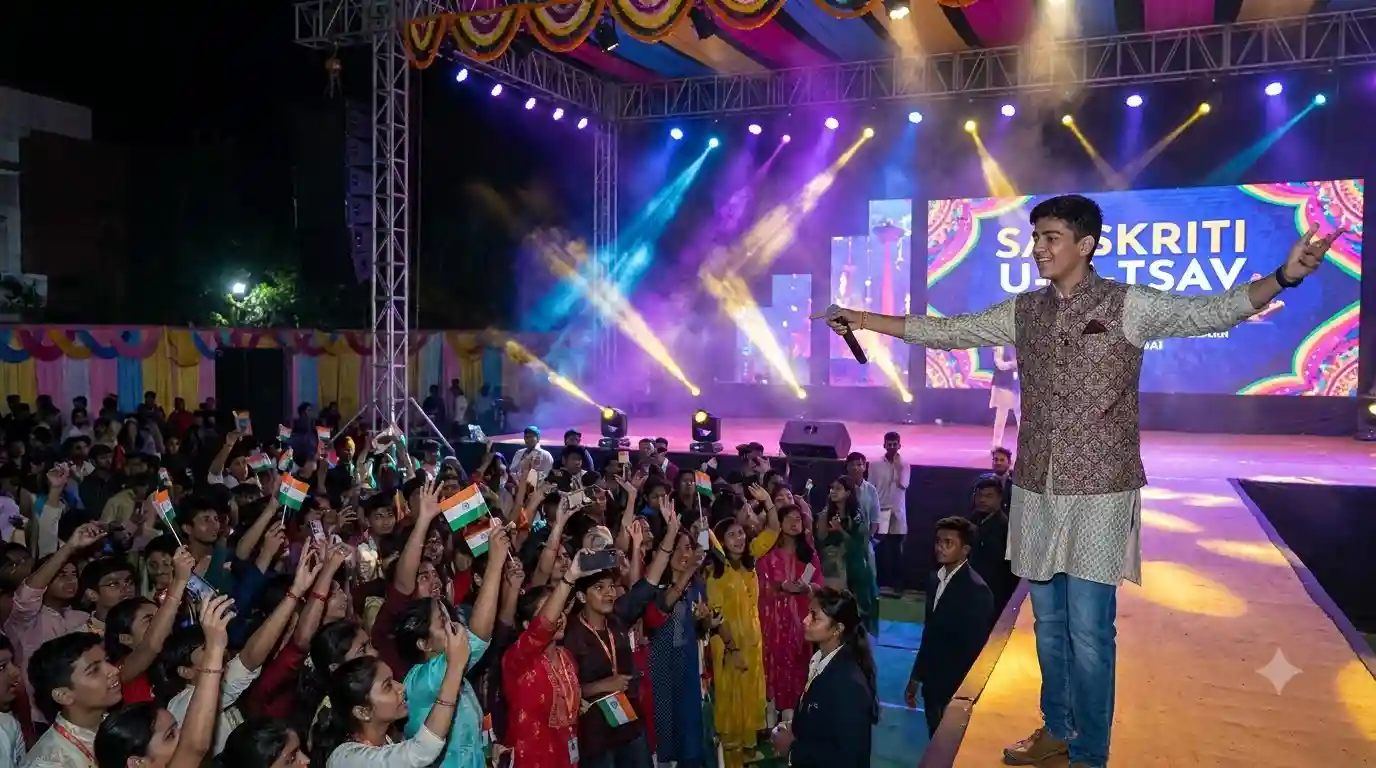
Best Anchoring Script For Cultural Event (With Hindi Shayari 2026)
“A cultural event is not driven by the schedule; it is driven by the energy of the anchor.”
If you are hosting a school, college, or corporate cultural fest, the biggest mistake you can make is using a highly formal, traditional Hindi script.
Opening your event with outdated lines like “Main aap sabhi ka hardik swagat karta hoon” will instantly make the youth audience lose interest and pull out their smartphones. Exploring creative opening lines for an anchoring script introduction ensures you capture attention before curiosity fades.
Today’s audience demands energy. They want an anchor who speaks their language—a mix of powerful Hindi Shayari and modern crowd interaction.
If you are looking for the perfect anchoring script in Hindi for a cultural event, you are in the right place. We have structured this script as a “Director’s Stage Rundown.” The stage directions are in English to help you prepare, while the exact spoken lines are written in high-energy Hinglish.
🎬 SCENE 1: The Grand Entry (Setting the Stage on Fire)
Your entry should command immediate attention. Before you formally welcome the guests, start with a powerful Shayari to establish your stage presence and create pin-drop silence.
Anchor 1 (High Energy): “Sitaron ki is mehfil mein, aap sabhi ka noor chamak raha hai… Fizaon mein ghuli hai sangeet ki dhun, aur har chehra yahan damak raha hai!”
Anchor 2 (Warm Smile): “Namashkar, Adaab, and a very spectacular Good Evening to everyone! Swagat hai aap sabhi ka is saal ke sabse bade aur sabse dhuandaar cultural extravaganza mein—[Event Name] 2026!“
Anchor 1: “Aaj ki is shaam mein na koi chinta hogi, na koi stress. Aaj yahan sirf do hi cheezein hongi—behisaab talent aur aapka behisaab shor! Toh kya aap sab taiyaar hain is safar par chalne ke liye? Let me hear you make some noise!”
🪔 SCENE 2: The Lamp Lighting (Deep Prajwalit)
After the loud and energetic opening, bring the volume down slightly to honor Indian traditions. The transition must be smooth and respectful.
Anchor 2 (Deep, Calm Voice): “Doston, humari bhartiya sanskriti yeh sikhati hai ki kisi bhi shubh kaam ki shuruat andhere se ujaale ki taraf badh kar karni chahiye.”
Anchor 1: “Tamso Maa Jyotirgamaya. Is shubh avsar par, is shaam ko ek pavitra shuruat dene ke liye, main aadar sahit aamantrit karna chahunga hamare Chief Guest [Guest Name] aur humare Principal Sir/Ma’am ko, ki wo aayen aur deep prajwalit karke is karyakram ka shubharambh karein.”
(Wait silently for the lamp lighting ceremony to finish)
Anchor 2: “Is roshni ke saath hi humari mehfil ka aagaaz ho chuka hai. Thank you so much, Sir/Ma’am, for your blessings.”
💃 SCENE 3: The Dance Hype (Performance Introduction)
Introducing a dance group requires hype. Do not just announce their names; build anticipation so the audience is cheering before the music even starts.
Anchor 1: “Baaton ka silsila toh chalta rahega, par ab waqt aa gaya hai stage par thodi aag lagane ka. Kyunki agle jo performers aa rahe hain, unke pairo mein bijli hai aur dil mein junoon!”
Anchor 2: “Bilkul! Unke liye bas itna hi kahungi:Hawaon ke rukh modne ka hunar rakhte hain,Hum kadmon se bijliyan giraane ka asar rakhte hain!“
Anchor 1: “Dil thaam ke baithiye aur apni seatbelts baandh lijiye, kyunki stage todne aa rahe hain [Group/Class Name] apne shaandaar dance performance ke saath! Put your hands together and give it up for them!”
🎤 SCENE 4: The Crowd Engagement (Filling the Dead Time)
Often, it takes a few minutes for the next group to set up their props on stage. Never leave the stage silent. Mastering the proper technique for anchoring during these brief gaps prevents awkward dead air and maintains high energy. Use this interactive filler to keep the energy alive.
Anchor 1: “Kya baat hai! Kya energy thi is performance mein! Lekin mujhe aisi feeling aa rahi hai ki stage par toh aag lagi thi, par hamari audience thodi thandi pad gayi hai. Awaaz kahan hai aapki?”
Anchor 2: “Lagta hai pichli row walon ne aaj khana nahi khaya! Chaliye ek chhota sa muqabla karte hain. Right side wali audience, jab main kahoon ‘Vande’, aap kahenge ‘Mataram’. Let’s see kisme kitna josh hai!”
(Engage the crowd with the chant to wake them up before announcing the next act).
🌟 SCENE 5: The Grand Finale (The Sign-Off)
Your exit should be just as memorable as your entry. Leave the audience with a beautiful thought and a heartfelt thank you.
Anchor 1: “Waqt kaise beet jata hai, pata hi nahi chalta. Ek aisi shaam jise hum shabdon mein bayaan nahi kar sakte, ab apne aakhri padaav par aa chuki hai.”
Anchor 2: “Jaate jaate bas inhi khubsoorat yaadon ke saath aapko chhod kar jaa rahe hain:Zindagi ke is safar mein kayi shaamein aayengi,Par aaj ki is shaam ki chamak hamesha yaad aayegi!“
Anchor 1: “Humare sabhi performers, backstage crew, aur sabse zyada aap—is kamaal ki audience ko dil se shukriya. Main hoon [Your Name].”
Anchor 2: “Aur main hoon [Co-Anchor’s Name]. Shubh ratri, apna khayal rakhiye, aur muskurate rahiye. Goodnight and Jai Hind!”
The Anchor’s Checkpoint: Mastering the Flow
To make this script work perfectly, you must master the contrast in your voice. Developing intentional vocal variety and voice modulation helps bring depth, texture, and emotional resonance to your delivery. When speaking the English stage directions or formal intros, use a smooth, professional voice. When delivering the Hindi Shayaris, increase your volume, speak slightly faster, and punch the final rhyming words with maximum confidence!