Veer Baal Diwas Speech 2025: Hindi & English (Student)
Why Every Student Must Know About Veer Baal Diwas?
Bravery is not defined by years; it is defined by deeds.
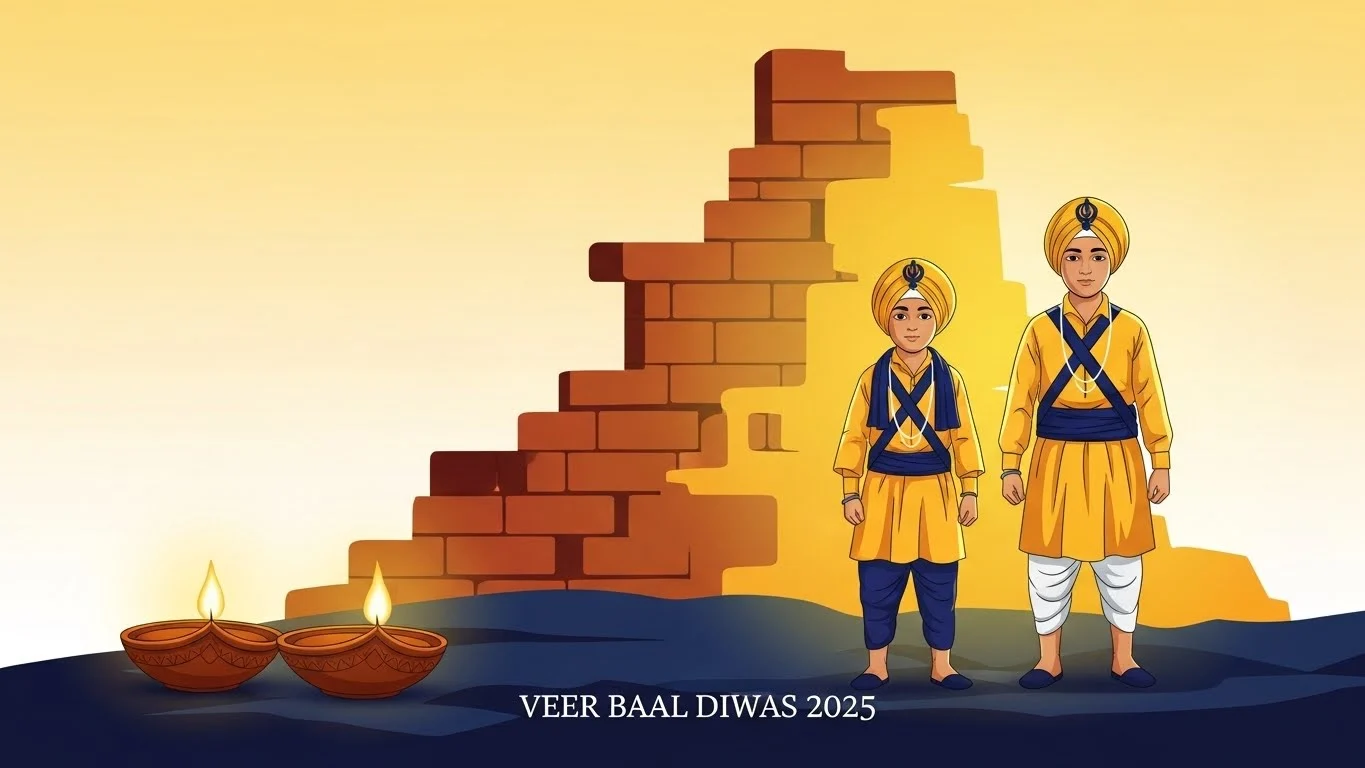
On December 26, India commemorates Veer Baal Diwas to pay homage to the supreme sacrifice of the Chhote Sahibzade—Baba Zorawar Singh Ji (9) and Baba Fateh Singh Ji (7), the younger sons of Guru Gobind Singh Ji.
This day is not just a historical date. It is a reminder to every student that you are never too young to stand up for your values. When these two young souls were offered treasures to abandon their faith, they chose death over dishonesty. They were bricked alive in the walls of Sirhind, yet their spirits remained unconquered.
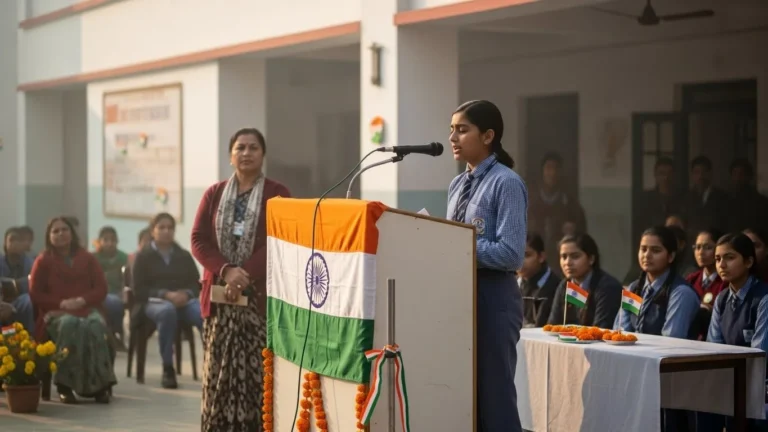
For a school speech, this topic requires a specific tone. It is a mix of Veer Rasa (Heroism) and Shok (Grief). You cannot deliver this speech like a casual morning news report. It needs weight, respect, and correct pronunciation.
This article provides two carefully written scripts (in Hindi and English) that are short enough to memorize but powerful enough to give the audience goosebumps.
Below are two perfect scripts—one in English and one in Hindi—designed specifically for school students to memorize quickly.
1. Veer Baal Diwas Speech in English
(For Morning Assembly)
Start Speaking Here:
“Respected Principal, Teachers, and my dear friends. Good Morning.
Today, we have gathered to observe ‘Veer Baal Diwas’. The Government of India declared December 26 as a day to honor the immense sacrifice of the four Sahibzadas of Guru Gobind Singh Ji.
Specifically, we remember Baba Zorawar Singh Ji (9 years old) and Baba Fateh Singh Ji (7 years old). On this day in 1705, these brave souls were bricked alive by the Mughals because they refused to change their religion. They stood firm for justice and truth.
Their story teaches us a powerful lesson: Bravery has no age.
Let us bow our heads in respect to these young martyrs who kept their heads high till the very end.
Waheguru Ji Ka Khalsa, Waheguru Ji Ki Fateh!
2. Veer Baal Diwas Speech in Hindi (हिंदी भाषण)
(Short & Emotional)
Start Speaking Here:
“Aadarniya Pradhanacharya ji, Shikshak gan, aur mere pyare doston.
Aaj ka din humare itihas ka sabse mahan aur bhavuk din hai. Aaj hum ‘Veer Baal Diwas’ mana rahe hain.
Yeh din Guru Gobind Singh Ji ke chhote Sahibzadon—Baba Zorawar Singh aur Baba Fateh Singh ki shahadat ko yaad karne ka din hai. Sirf 7 aur 9 saal ki umar mein, unhone dharam ke liye apni jaan kurbaan kar di, lekin dushman ke aage sir nahi jhukaya.
Unka balidan humein sikhata hai ki agar iraade mazboot hon, toh umar mayne nahi rakhti.
Aaiye, aaj hum un nanhe veeron ko dil se naman karein.
Bole So Nihal… Sat Sri Akal!“
Quick Facts for Students (Add this to your chart)
- Date: 26th December
- Occasion: Martyrdom of Chhote Sahibzade
- Father: Guru Gobind Singh Ji
- Mother: Mata Gujri Ji
Speaker’s Guide: Etiquette for Veer Baal Diwas
Since this speech involves religious history and martyrs, there are certain protocols you must follow to show respect. Here are 4 tips to deliver this speech perfectly:
1. The Greeting (Jakara) In a standard speech, you say “Good Morning.” But on this day, it is highly impactful to start or end with the Sikh greeting:
- “Waheguru Ji Ka Khalsa, Waheguru Ji Ki Fateh”
- Or the war cry: “Bole So Nihal… Sat Sri Akal!”
- Tip: Say this loudly and with energy. It instantly connects with the history of the Khalsa.
2. Covering Your Head (Optional but Respectful) If your school allows it, covering your head with a small handkerchief or scarf during this speech is a sign of immense respect in Sikh culture. If you cannot cover your head, simply ensure you stand straight and do not fidget.
3. Pronunciation Matters Do not mispronounce the names.
- Sahibzade: Pronounced as Sahib-Zaa-Day.
- Zorawar: Pronounced as Zo-Raa-War.
- Fateh: Pronounced as F-teh (Soft ‘t’).
- Tip: Practice these names 5 times before going on stage.
4. Emotional Control When you narrate the line “bricked alive” (neenv mein chinwa diya), slow down. Let the silence hang in the air for 2 seconds. Let the audience feel the weight of that cruelty. Do not rush through the emotional parts.
Frequently Asked Questions (FAQs)
Q1: Why is it called ‘Veer Baal Diwas’?
Ans: ‘Veer’ means Brave, ‘Baal’ means Child, and ‘Diwas’ means Day. It literally translates to “Brave Children’s Day,” honoring the courage of the young Sahibzadas.
Q2: Can I perform a skit on this topic?
Ans: Yes, but be very careful. In Sikh tradition, it is often forbidden to have human actors play the role of the Gurus or their families directly in a disrespectful manner. It is safer to do a “Narrative Skit” (Dastan-e-Sirhind) where a narrator tells the story while students act as common people/soldiers, rather than impersonating the Sahibzadas directly.
Q3: Is this a holiday in schools?
Ans: It is not a gazetted national holiday like Republic Day, but it is an “Observance.” Schools are encouraged to hold assemblies, quizzes, and painting competitions to educate students about this history.
Q4: What color should I wear?
Ans: If you have a choice, Blue (representing the Khalsa) or White (representing Peace/Purity) are the best colors for this occasion.
Conclusion
The story of the Sahibzadas is not a tragedy; it is a victory of spirit. By delivering this speech, you are keeping their legacy alive. Stand tall, speak loud, and make your school proud.
Sat Sri Akal.