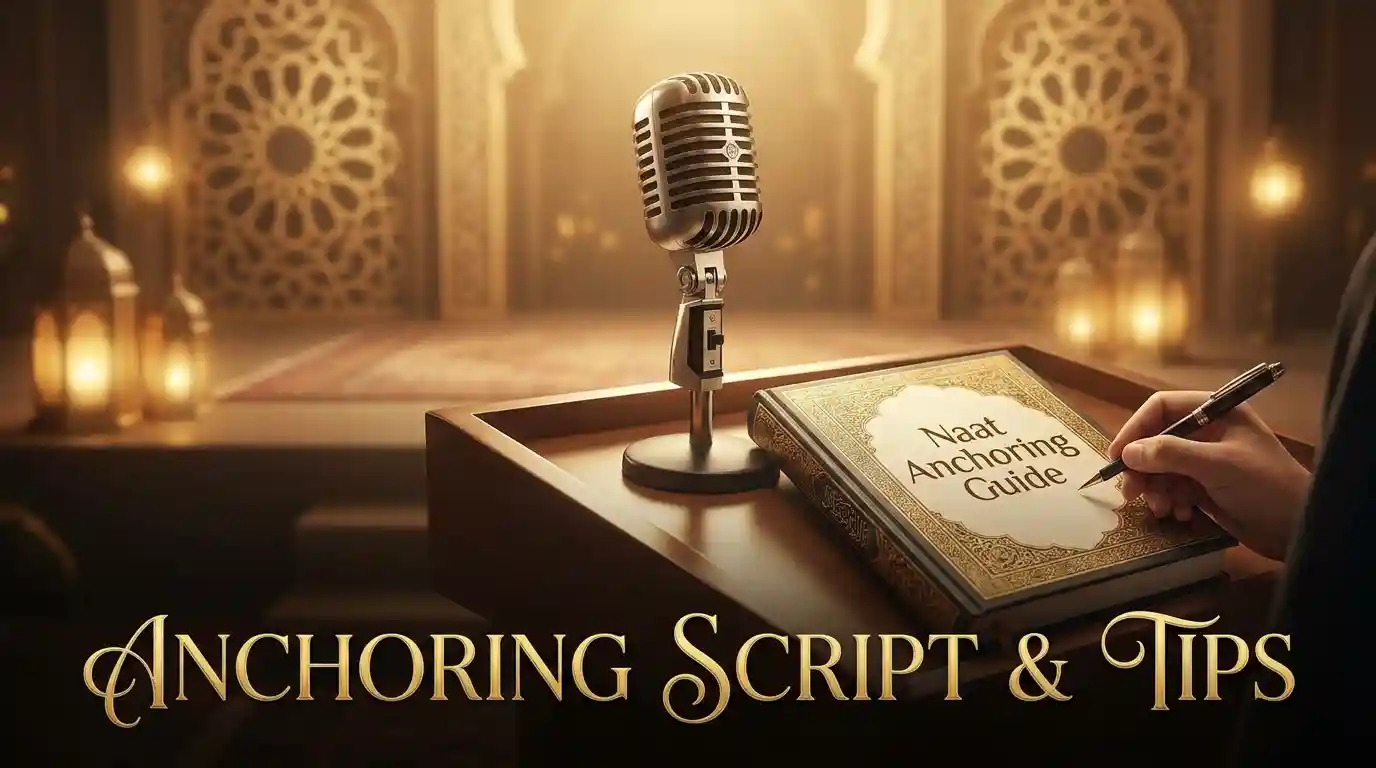
Anchoring Script For Naat (With Naat Khwani Anchoring Tips)
Most Naat anchors say the same six lines.
Same opening. Same “ba-adab, ba-mulahiza hoshiyar.” Same rushed transition into the next Naat Khan. Nobody remembers the anchor. They remember the Naat – and if the anchoring was bad, they remember that too, for the wrong reasons.
A Naat Khwani isn’t a school function. There’s no lamp-lighting, no dance item, no loud applause between segments. The room is quieter, more reverent, and the anchor’s job is completely different: hold that reverence together without becoming a distraction. Get it wrong and you break the mood the Naat Khan just built. Get it right and nobody even notices you did anything – which is the actual compliment. (This is why the usual playbook of strong opening lines built for high-energy fests doesn’t translate here – a Naat Khwani calls for restraint, not a hook.)
1. Common Mistakes Anchors Make at a Naat Event
Talking too much between Naats. This is the biggest one. A Naat Khwani isn’t a talk show. If your transition runs longer than the applause, you’ve made it about you.
Clapping culture. Loud “zordaar taaliyon” energy doesn’t belong here. Some audiences don’t clap for Naats at all — they say “Subhan Allah” or stay silent out of respect. An anchor who calls for applause like it’s a birthday party is reading the room wrong.
Mispronouncing names and titles. Naat Khans often carry titles – Qari, Hafiz, Ustad — and mispronouncing them in front of a room that knows better is an instant credibility hit. Confirm names and titles before you go on stage, every time.
No breathing room before the next Naat. Rushing straight into the introduction the second the last one ends doesn’t feel efficient — it feels disrespectful. Let the room sit in the moment for a few seconds first.
Overusing Arabic/Urdu phrases you don’t fully understand. Sprinkling in “Alhamdulillah” and “Insha’Allah” because it sounds appropriate, without understanding when they actually fit, comes across as performative rather than sincere. Use them where they’re genuinely meant, not as filler.
2. The script
Keep this tight. The Naat Khans are the event – you’re the connective tissue between them, not the headline.
Opening (before the first Naat):
“Assalamu Alaikum, and a warm welcome to everyone who has joined us this evening. We’re gathered here for an evening of Naat Khwani — a chance to sit together, quiet our hearts, and listen to praise for the Prophet Muhammad (peace be upon him). I’d request everyone to keep their phones on silent, and let’s begin with our first Naat Khan of the evening.”
Introducing a Naat Khan (repeat this pattern, vary the wording each time):
“Our next reciter has been trained under [the local madrasa or ustad’s name, if known] and has performed at gatherings across [city/region]. Please give your attention — not applause, just your presence — to [Naat Khan’s name].”
Short transition between Naats (5–10 seconds, no more):
“May Allah accept that. We’ll take a brief pause before our next Naat Khan comes forward.”
Handling a technical issue (mic cutting out, sound delay):
“It looks like we’re having a small issue with the sound. Please bear with us for a moment — we’ll have it sorted shortly, and the Naat will continue.”
Closing:
“That brings us to the close of tonight’s Naat Khwani. Thank you to every reciter who shared their voice with us this evening, and thank you to everyone who came and sat with us in this gathering. Assalamu Alaikum, and safe travels home.”
3. What to do if Something Goes Wrong
Sound systems fail. Naat Khans run late. A guest speaker doesn’t show. Here’s the fix for each:
- Mic dies mid-Naat: Don’t fill the silence with chatter. Say one calm line (“We’re fixing the sound, please bear with us”) and let the room wait quietly. Rushing to talk over a technical gap breaks the reverence you’ve built – the same calm-communication principle covered in this guide for event hosts on technical glitches applies here, just at a much lower volume.
- A Naat Khan arrives late: Reorder the lineup instead of announcing the delay to the room. Quietly tell the next scheduled reciter to go first — most audiences never notice a swap.
- A guest speaker cancels: Have one backup transition line ready (“We’ll move directly into our next segment”) so you’re not standing on stage improvising an explanation.
- Outdoor event, wind/weather issue: Keep a spare mic windscreen and a backup speaker cable in your bag. This sounds obvious until you’re the anchor standing there with neither.
4. Director’s Notes
Your voice should drop, not rise, at a Naat event. Most anchoring advice tells you to project energy and enthusiasm — ignore that here. This is one of the rare cases where the usual voice modulation tips need to be inverted: a slightly lower register, slower pace, and softer volume signal respect for the setting far better than an upbeat “function host” voice.
Pause before you speak, not just after. A two-second gap between the Naat ending and you starting your next line gives the audience room to sit with what they just heard. Anchors who rush this transition make the whole event feel like a checklist being worked through rather than a gathering being honored.
Watch your hands. This isn’t a stage where big gestures land well — keep movement minimal, stand mostly still, and let your voice do the work instead of your body.
If you’re not sure how to pronounce a name, title, or Arabic phrase, ask before you go on stage. Guessing in front of a room that will know the difference costs you more credibility than asking would have.
And don’t try to make jokes to “warm up” the crowd. A Naat Khwani doesn’t need warming up — it needs a calm, steady hand guiding the room from one recitation to the next.